
RF Ablation Procedure
Radiofrequency Ablation (RFA) is a minimally invasive procedure for varicose veins and chronic venous insufficiency. Venous insufficiency is the underlying circulatory disorder responsible for varicose veins (and other vein problems). As such, by treating varicose veins and their root cause, RFA ensures optimal, long-lasting results while minimizing the risk of recurrence.
How Does Radiofrequency Ablation Work?
Radiofrequency ablation works by shrinking and destroying the diseased saphenous veins responsible for varicose veins.
RF ablation is an in-office, outpatient procedure that usually concludes within 30 minutes with no downtime, allowing you to resume your daily activities immediately. Furthermore, radiofrequency ablation has a 98% success rate, so there’s rarely a need for additional treatments.
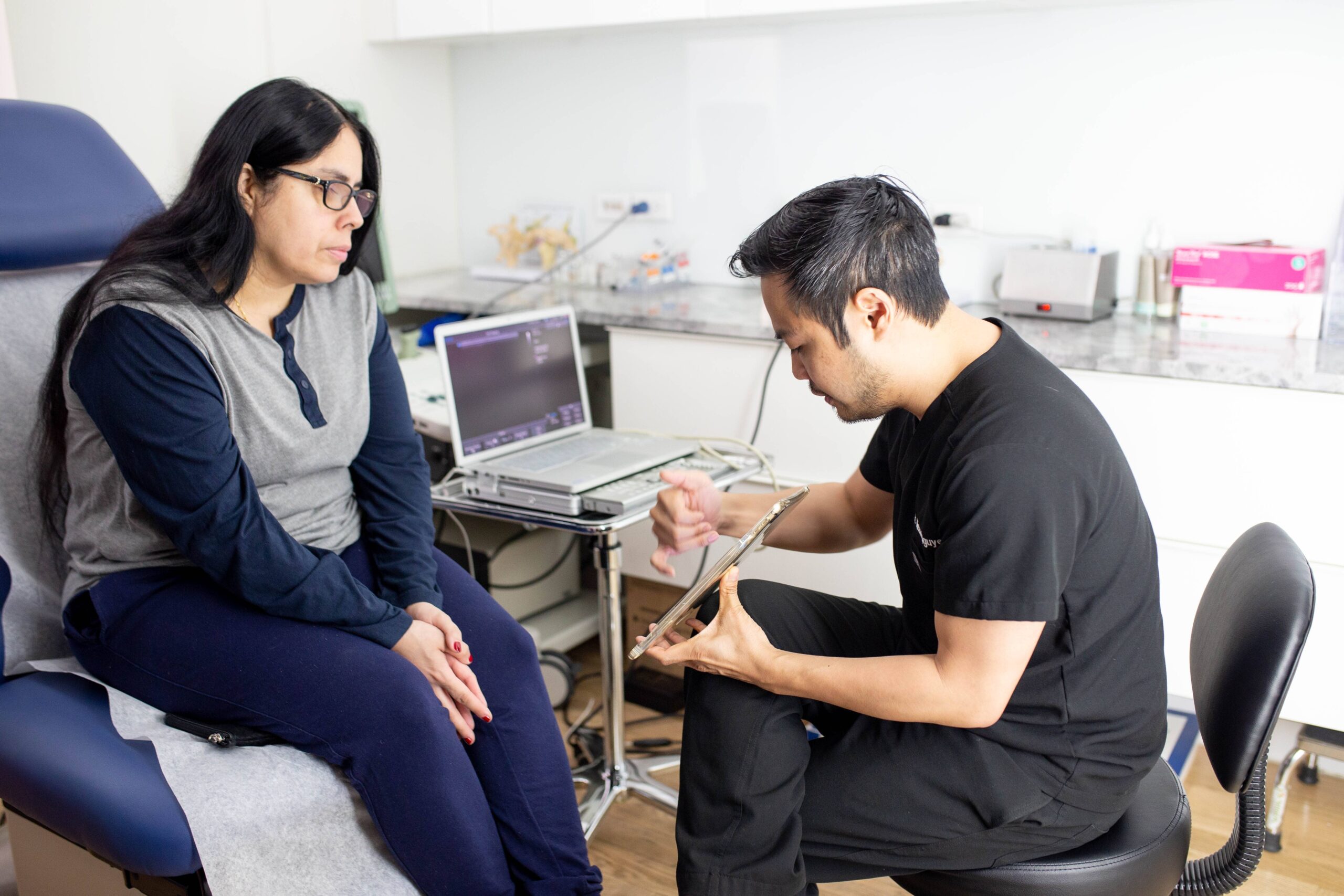
During radiofrequency ablation, the vein doctor makes a small incision on the skin’s surface to insert a thin tube (catheter) under ultrasound guidance. With ultrasound, the vein doctor accurately visualizes the diseased veins while guiding the catheter in place. Once the catheter is lodged in place, the vein doctor numbs the area with local anesthesia, ensuring a comfortable experience.
Finally, the vein doctor activates the catheter to generate thermal energy. This collapses the diseased vein and seals it shut. Once the diseased vein is closed, the accumulated blood reroutes into healthier leg veins, restoring effective blood circulation to the heart. The diseased vein is gradually absorbed by the body.
Radiofrequency ablation concludes within 30 minutes with no downtime. If you have underlying vein disease, this treatment may be covered by your insurance.
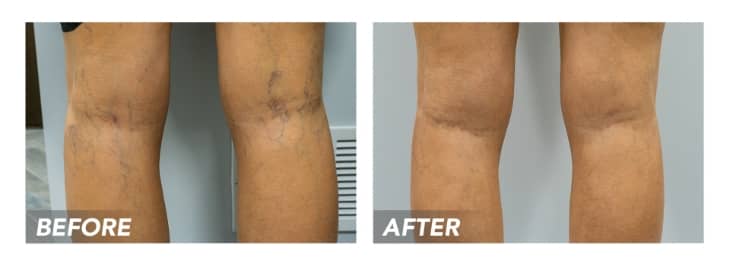
During the Sclerotherapy procedure, the affected leg is elevated and the vein doctor injects the sclerosant іn your varicose or spider veins. Thіѕ solution causes the lining of your blood vessels to collapse and the blood to clot inside of the vein, sealing it off. With time, the unhealthy veins turn into scar tissue, which eventually fades so the veins can no longer be seen. The blood flow is routed into healthy veins with valves that work properly, bringing the blood back to your heart. The procedure is done in an office or clinic and takes 10 to 30 mіnutеѕ, depending on the numbеr and size of varicose vеіnѕ treated.
Aftеr the insertion of scerosant, pressure is applied over the veins to prevent blood from pooling in the vein when you stand up. Your vein doctor will ask you to wear compression stockings for several days after the procedure
Your Expectations with Radiofrequency Ablation
- RF ablation involves no downtime, so you can resume your work and daily activities immediately after the procedure. You can walk immediately after the treatment.
- The vein doctor will wrap the treated leg in an ACE bandage. You must keep the bandage in place for at least 24 hours.
- You must wear compression stockings for at least one week after the procedure to ensure optimal recovery.
Why Choose New York Vein Clinics?
Most of these side effects can be avoided completely if Sclerotherapy is performed by an experienced physician
Chronic venous insufficiency is a dangerous (and, in some cases, fatal) condition if left untreated. Radiofrequency ablation (and other minimally invasive procedures) treat varicose veins and the underlying vein disease without major side effects or complications.
While radiofrequency ablation is generally safe, inexperienced vein doctors may increase the risk of side effects/ complications due to inadequate diagnosis or evaluation.
Our vein clinics in New York have performed hundreds of radiofrequency ablation procedures without complications. That’s because our exceptional vein doctors assess all patients individually. They examine your leg veins, study your medical history, administer vascular imaging tests, and curate the ideal treatment plans for you.
If you have varicose veins or other signs of vein disease, please schedule a consultation with our vein physicians. They’ll gladly answer your questions and determine if you’re a suitable candidate for radiofrequency ablation.
What are the Pros & Cons of Sclerotherapy Treatment?
Pros of Sclerotherapy for Spider and Varicose Veins
The biggest advantage of sclerotherapy treatment is that іt’s not a surgery and does not require lots of preparation or a lengthy recovery. According to the US Department of Health and Human Services (Office on Women’s Health), the treatment can be performed in-office and doesn’t require any type of anesthesia.
Anоthеr advantage оf sclerotherapy treatment іѕ that іt has minimal impact on the life of a patient. The treatment can be done wіthіn 30 minutes or even less. There’s no need to recuperate or rest up after the injections, and most patients find that they are able to return to their regular activities as soon as possible.
Cons of Sclerotherapy for Spider and Varicose Veins
No treatment is ever perfect, and not all treatment is right for everybody. There are some cons to sclerotherapy treatment. One potential disadvantage of the treatment is that it doesn’t necessarily work on all patients.
However, it is typically recommended for spider veins and for smaller varicose veins. People with very prominent or large veins usually see better results from a combination of different procedures and sclerotherapy may need to be used in combination with radiofrequency ablation or VenaSeal.
Not sure if you’re covered?
Try our FREE Health Insurance Coverage Checker by filling out this form:
Contact us

Call us
Speak with one of our team members right away to get answers about insurance coverage, scheduling an appointment, and our vein clinic locations 332-263-4887.

Book online
Request an appointment at any of our New York Vein Clinics by visiting our Book Appointment page. Before your visit, we offer free insurance verification.

Get directions
Learn how to easily get to the NY Vein clinic nearest you.