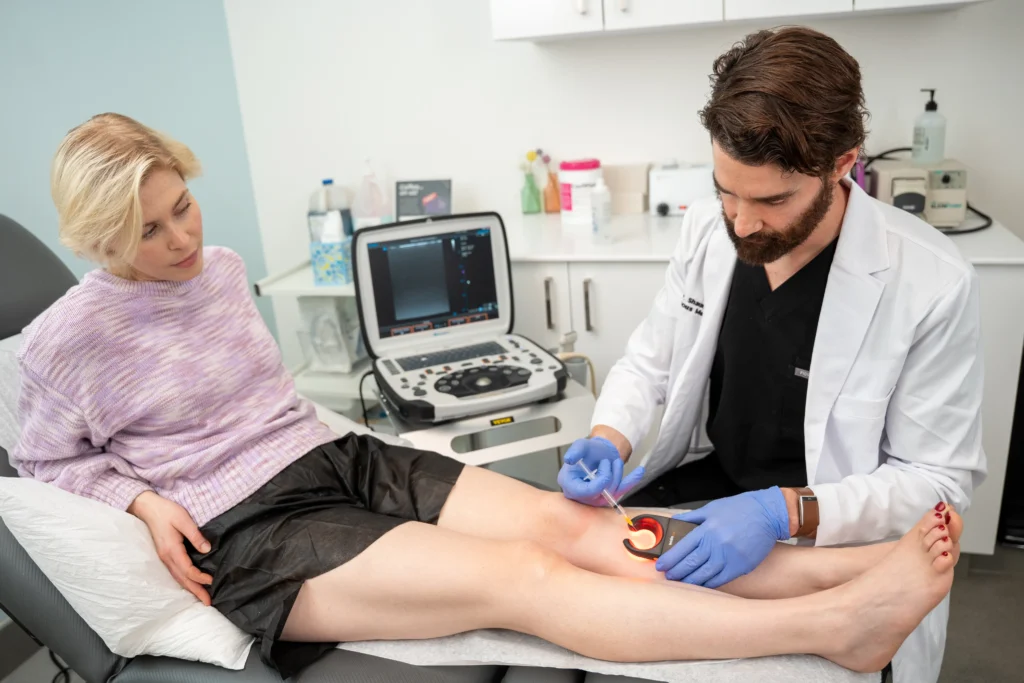
Vein Clinics in New York to Treat Chronic Venous Insufficiency
Vein clinics are available at locations throughout New York State, from Midtown Manhattan to Suffolk County. Each clinic is staffed by vein specialists who focus on diagnosing and treating chronic venous insufficiency, a condition in which leg veins fail to return blood efficiently to the heart.
Most vein procedures take 30 minutes or less using local anesthesia, with patients walking out the same day. Insurance coverage is verified before the first visit, so there are no surprises.
How to recognize when leg symptoms may indicate a vein condition
Leg vein problems often develop gradually, and the early signs can be easy to overlook. Common symptoms include:
- A feeling of heaviness in the legs, especially by mid‑afternoon
- Swelling in the ankles after standing for several hours
- Nighttime cramping that disrupts sleep
At first, these issues may seem routine, something to manage with rest or home remedies. Compression socks, leg elevation, or supplements might provide temporary relief. However, if the symptoms are related to vein function, they usually return.
Over time, visible changes may appear, such as:
- Thin purple lines behind the knee
- A twisted vein near the ankle
- Spider veins that spread gradually
When these patterns persist, they may suggest chronic venous insufficiency (CVI). CVI occurs when the one‑way valves inside the leg veins weaken, allowing blood to flow backward and pool in the lower legs instead of returning to the heart.
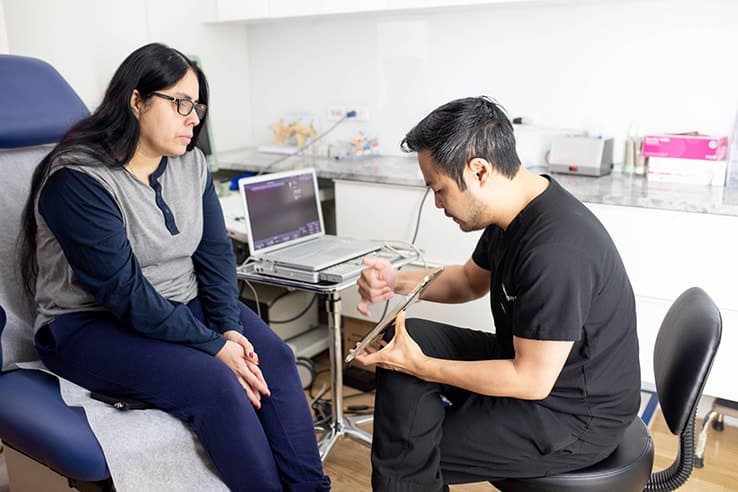
While symptoms can point toward a vein condition, the only way to confirm the diagnosis is through a physical examination and a duplex ultrasound. These tests help determine the underlying cause and guide the most appropriate treatment.
What is chronic venous insufficiency and why does it cause these symptoms?
Inside healthy leg veins, small valves open to let blood flow upward toward the heart, then close to prevent it from falling back down. When these valves weaken or fail, blood collects in the lower legs. This pooling creates pressure that can produce a range of symptoms.
Sensations commonly associated with CVI include:
- Leg heaviness or fatigue, especially later in the day
- Aching, throbbing, or a tight feeling in the calves
- Nighttime cramping or restless legs
- Itching or burning near visible veins
Visible changes may include:
- Varicose veins: twisted, bulging veins visible beneath the skin
- Spider veins: thin, web like clusters near the surface
- Ankle swelling that worsens through the day
- Skin discoloration or texture changes near the lower leg
CVI is considered a progressive condition. Without evaluation, symptoms may change over time. An ultrasound can determine whether vein dysfunction is involved and guide the most appropriate treatment approach.
Why a diagnostic vein ultrasound is the first step toward answers
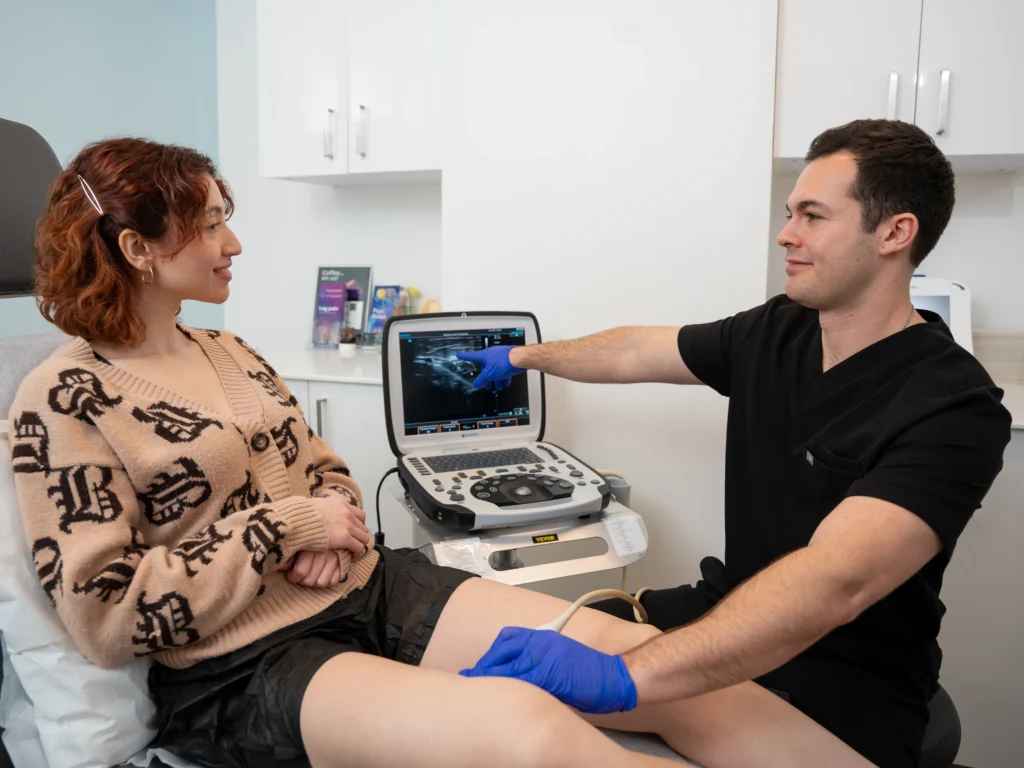
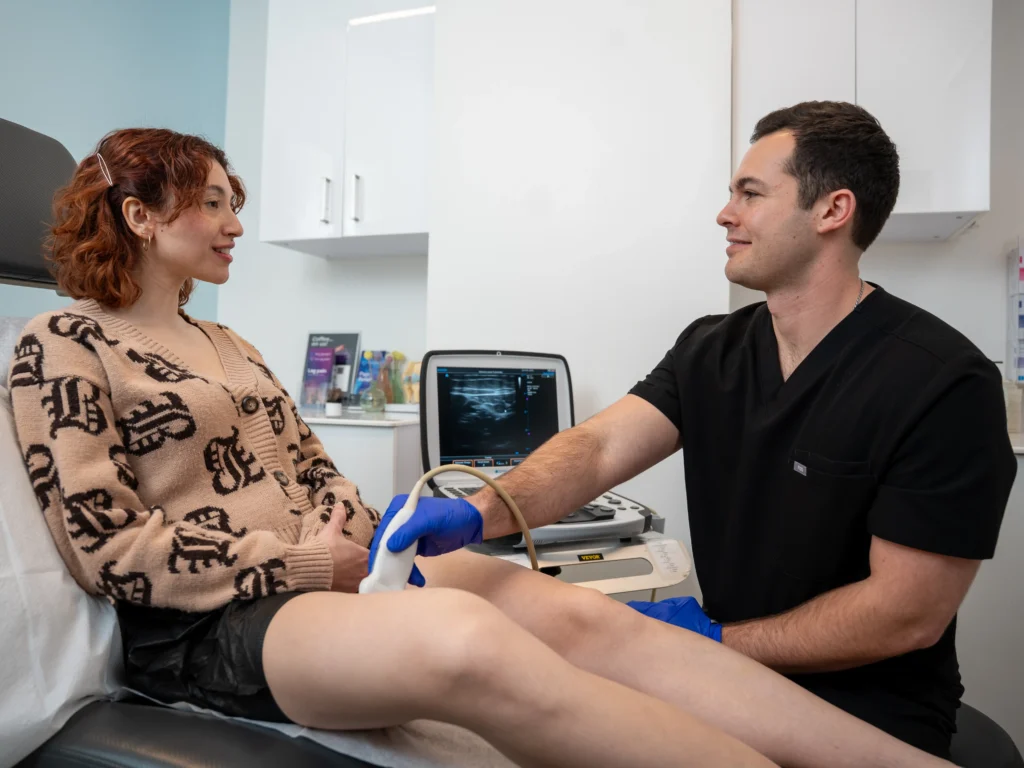
Leg symptoms can have multiple causes. A duplex ultrasound is a non invasive way to see exactly how blood moves through the leg veins. The scan uses sound waves to create images of the veins and measure blood flow direction in real time.
The evaluation typically takes 15 to 20 minutes. It shows whether valves are functioning properly or allowing blood to flow backward. If reflux is present, the ultrasound identifies which veins are affected and how significantly.
For those whose symptoms are related to CVI, the ultrasound provides a clear picture that guides treatment decisions. For those whose symptoms have other causes, it rules out vein dysfunction and offers clarity. Either way, the guesswork ends.
Where to find a vein clinic in New York
Clinic locations are available throughout New York, including Manhattan, Brooklyn, Queens, the Bronx, Staten Island, Westchester, and Long Island. Each location offers diagnostic ultrasound, minimally invasive treatment, and insurance verification before the appointment.
Midtown Manhattan
290 Madison Ave, Suite 202, New York, NY 10017
Across from Grand Central Terminal. Walking distance from Bryant Park and the New York Public Library. Accessible via 4, 5, 6, 7, and S trains. View Midtown location →
Financial District
156 William St, Suite 302, New York, NY 10038
Near Fulton Street Station and the South Street Seaport. Convenient for those working in Lower Manhattan. Accessible via 2, 3, 4, 5, A, C, J, and Z trains. View FiDi location →
Upper East Side
1111 Park Avenue, Suite 1B, New York, NY 10128
Near the Guggenheim Museum and Central Park. Located in the Museum Mile area. Accessible via 4, 5, and 6 trains to 96th Street. View Upper East Side location →
Downtown Brooklyn
188 Montague St, 10th Floor, Brooklyn, NY 11201
Steps from Brooklyn Borough Hall and the Brooklyn Heights Promenade. Accessible via 2, 3, 4, 5, A, C, F, and R trains. View Downtown Brooklyn location →
Brighton Beach
23 Brighton 11th St, 7th Floor, Brooklyn, NY 11235
Near the Brighton Beach boardwalk. Serves Coney Island, Sheepshead Bay, and Manhattan Beach. Accessible via B and Q trains. View Brighton Beach location →
Forest Hills
107-30 71st Rd, Suite 204, Forest Hills, NY 11375
Near Forest Hills Stadium and Austin Street shops. Serves Rego Park, Kew Gardens, and Jamaica. Accessible via E, F, M, and R trains. View Forest Hills location →
Astoria
23-25 31st St, Suite 410, Astoria, NY 11105
Serving western Queens, including Long Island City, Woodside, and Jackson Heights. Accessible via N and W trains to Astoria Blvd. View Astoria location →
Bronx
2100 Bartow Ave, Suite 400, Bronx, NY 10475
In Co-op City near Bay Plaza Shopping Center. Serves Pelham Bay, Throggs Neck, and Eastchester. Accessible via Bx23, Bx26, and Q50 buses. View Bronx location →
Staten Island
4236 Hylan Blvd, Staten Island, NY 10312
On Hylan Boulevard in the Great Kills area. Serves Eltingville, Tottenville, and New Dorp. View Staten Island location →
Hartsdale (Westchester)
280 N Central Ave, Suite 450, Hartsdale, NY 10530
Serving Westchester County, including Scarsdale, White Plains, and Yonkers. Near the Hartsdale Metro North station. View Hartsdale location →
Yonkers
124 New Main St, Yonkers, NY 10701
In downtown Yonkers near Getty Square. Serves southern Westchester and the Riverdale area of the Bronx. View Yonkers location →
Jericho (Long Island)
350 Jericho Tpke, Suite 310, Jericho, NY 11753
Near Jericho Commons on Long Island's North Shore. Serves Hicksville, Syosset, and Westbury. View Jericho location →
Port Jefferson (Suffolk County)
70 N Country Rd, Suite 201, Port Jefferson, NY 11777
Near Mather Hospital in Suffolk County. Serves Stony Brook, Setauket, and the North Shore. View Port Jefferson location →
West Islip (South Shore)
500 Montauk Hwy, Suite G, West Islip, NY 11795
Near Good Samaritan Hospital on Long Island's South Shore. Serves Babylon, Bay Shore, and Islip. View West Islip location →
What happens during a minimally invasive vein procedure
Treatment begins with the diagnostic ultrasound to map which veins are affected. If treatment is appropriate, it can often be scheduled the same day or soon after. Most procedures take 30 to 45 minutes and use local anesthesia.
Minimally invasive treatment options include:
- Radiofrequency ablation: Uses heat delivered through a thin catheter to seal damaged veins
- Endovenous laser ablation: Uses laser energy to close veins from the inside
- Sclerotherapy: Injects a solution that causes spider veins to fade
- Ambulatory phlebectomy: Removes surface varicose veins through tiny incisions
These procedures close or remove the damaged veins. Blood naturally reroutes through healthier veins nearby. The treated veins are gradually absorbed by the body over the following weeks. The specific procedure recommended depends on which veins are affected and can only be determined after a diagnostic ultrasound.
H2 What to expect during the first 48 hours after treatment
Recovery varies by individual and procedure. Walking is encouraged immediately after treatment. Most patients return to desk work within 24 to 48 hours. Driving is typically possible the same day for sclerotherapy and the following day for ablation procedures.
Common post-procedure experiences include:
- Mild soreness or tightness in the treated area
- Bruising that develops in the first day or two
- A sensation of pulling or firmness in the leg
Compression stockings are typically recommended for one to two weeks. Bruising fades over several weeks. Strenuous exercise and prolonged standing are usually avoided for the first week.
How to schedule a vein evaluation in New York
For those experiencing persistent leg symptoms, an evaluation can clarify whether vein function is involved. Insurance coverage is verified before the appointment so patients know what to expect. Find the nearest clinic location to schedule a consultation.
Frequently asked questions about vein treatment in New York
Does insurance cover varicose vein treatment in New York?
Many insurance plans cover varicose vein treatment when it is medically necessary. Coverage depends on the diagnosis, the specific plan, and whether conservative treatments have been tried. Insurance benefits are verified before the first appointment.
How long does a vein evaluation take?
The initial consultation includes a medical history review, physical examination, and diagnostic ultrasound. The ultrasound portion takes 15 to 20 minutes. The entire visit typically lasts 45 to 60 minutes.
Can varicose veins come back after treatment?
The treated veins do not return. However, new varicose veins can develop over time in patients with ongoing risk factors such as genetics, prolonged standing, or pregnancy. Periodic follow up can identify new issues early.
What is the difference between varicose veins and spider veins?
Varicose veins are larger, twisted veins that bulge beneath the skin. Spider veins are smaller, web like clusters near the surface. Both can result from vein dysfunction, though varicose veins are more likely to cause symptoms like pain, heaviness, and swelling.
Where are the vein clinic locations in New York?
Clinics are located throughout New York State, including Midtown Manhattan, Financial District, Upper East Side, Downtown Brooklyn, Brighton Beach, Forest Hills, Astoria, the Bronx, Staten Island, Hartsdale, Yonkers, Jericho, Port Jefferson, and West Islip. View all New York locations.